
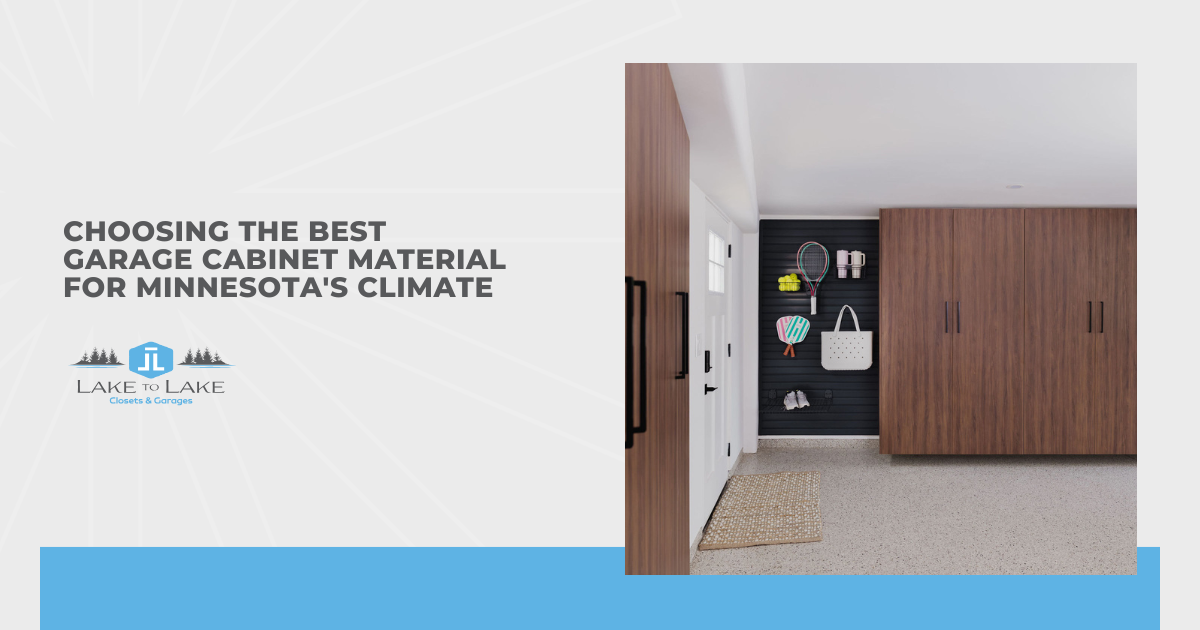
Minnesota's climate is one of the toughest in the country, and your garage cabinets take the brunt of it year after year. From subzero winters to humid summers, the temperature swings here push materials to their limits in ways that most homeowners do not anticipate until the damage is already done. As someone who works with garage storage every day, I can tell you that the material you choose from the start is the single biggest factor in how well your cabinets hold up over time.
Not every garage cabinet material is designed to handle the climate in Minnesota. Wood warps, MDF swells, and even certain metals corrode faster than you might expect when freeze-thaw cycles and moisture are a constant reality in your garage. Some materials handle the cold well but struggle with humidity, while others resist moisture but crack under extreme temperature swings. Knowing where each material falls short and where it performs well puts you in a much better position to choose something that lasts.
Picking the wrong material can be a costly mistake that leads to structural failure or damage. Below, I cover everything that goes into choosing the best garage cabinet material for Minnesota's climate.
- Popular garage cabinet materials and how they perform
- Performance of each material against Minnesota's climate
- Maintenance requirements for each material
- Other considerations when choosing garage cabinets
- Recommendations for the best garage cabinet material
Read on to cut through the options and find the garage cabinet material that works best for your garage.
Popular Garage Cabinet Materials and How They Perform
Longevity in garage cabinets starts with one decision made before anything else: the material. Each option comes with its own strengths and trade-offs, and what works well in a mild climate doesn't always hold up in Minnesota's extreme conditions. I've seen homeowners invest in beautiful cabinets only to deal with warping, rust, and swelling after just a couple of seasons because the material wasn't right for their garage environment.
Here's a quick breakdown of the most common garage cabinet materials and what you can expect from each one:
- Steel: Strong and durable with solid weight capacity. Without a quality powder coat finish, rust and condensation become real problems in a humid garage environment.
- Stainless Steel: Naturally rust-resistant and easy to maintain over time. It costs more upfront and shows fingerprints and scratches more easily than other options.
- Aluminum: Lightweight and corrosion-resistant with good performance through freeze-thaw cycles. It's less rigid than steel and more prone to denting under heavy impact.
- Wood: Visually appealing and highly customizable for finished spaces. It warps, swells, and cracks quickly when exposed to moisture and temperature swings in an unheated garage.
- MDF and Plywood: Affordable and easy to finish with a clean, smooth surface. Both absorb moisture fast and deteriorate quickly outside of a climate-controlled environment.
- Polyethylene and Resin: Moisture and rust-proof with no risk of corrosion or swelling. Weight capacity is limited and the material can become brittle in extreme cold.
What becomes clear when you line these materials up is that no single option is perfect for every garage. Your best choice depends on whether your garage is heated, how much moisture it sees, and what you're storing in it. I find that most Minnesota homeowners with unheated garages are best served by steel with a powder coat finish or aluminum, while wood and MDF make more sense in a finished, climate-controlled space.
Performance of Each Material Against Minnesota's Climate
Garage cabinets in Minnesota's climate face conditions that most materials weren't designed to handle, and understanding how each one responds helps you make a smarter decision from the start. Subzero winters, humid summers, and constant freeze-thaw cycles don't affect all materials the same way, and the gap in performance becomes very apparent over time. I've seen cabinets that looked great on day one fall apart within a few seasons simply because the material wasn't matched to the conditions it was up against.
See how each garage cabinet material holds up when Minnesota's climate puts it under pressure:
- Extreme Cold and Subzero Temperatures: Metal materials like steel and aluminum hold their shape and strength well below zero. Wood and composite materials crack, become brittle, and lose structural integrity faster in sustained extreme cold.
- Freeze-Thaw Cycles: Steel with a powder coat finish and aluminum expand and contract through repeated cycles without significant damage. Wood, MDF, and resin struggle more with this pattern and show wear much sooner.
- Humidity and Moisture: Stainless steel, aluminum, and polyethylene resist moisture without corroding or swelling. Wood and MDF absorb it quickly, leading to warping, swelling, and surface deterioration that's difficult to reverse.
- Heat and UV Exposure: Metal cabinets hold up well through Minnesota's warmer months without fading or losing strength. Wood and resin materials are more vulnerable to UV exposure, which fades finishes and weakens the surface over extended periods.
Taken together, these conditions make a strong case for metal-based materials in most garages. Steel and aluminum consistently perform across all four climate challenges, while wood and composite options show clear limitations outside of a controlled environment. Your garage's exposure to these conditions is the most honest filter you can use when narrowing down your material choice.
Maintenance Requirements for Each Material
Even the best garage cabinet material won't hold up in Minnesota's climate without some level of care behind it. Maintenance doesn't have to be time-consuming, but identifying what each material needs helps you stay ahead of the kind of damage that shortens a cabinet's lifespan significantly. I've found that most cabinet failures in this climate come down to neglect rather than a bad material choice, and a little consistent upkeep goes a long way.
Take a look at what each garage cabinet material requires to stay in good condition over time:
- Steel: Wipe down regularly to prevent moisture buildup and inspect periodically for rust spots before they spread. Touch up any chips or scratches in the powder coat finish as soon as you notice them.
- Stainless Steel: Clean with a stainless-appropriate cleaner and avoid abrasive pads that leave scratches on the surface. It's one of the lower-maintenance options on this list and holds up well with minimal effort.
- Aluminum: Regular wipe-downs keep aluminum cabinets clean and free from dust and grime buildup. Inspect occasionally for dents that can trap moisture and lead to wear in the long run.
- Wood: Seal or refinish periodically to protect against moisture penetration and inspect regularly for early signs of warping or swelling. Keep it away from direct moisture sources and address any surface damage before it spreads.
- MDF and Plywood: Check edges regularly for swelling and repaint or reseal as needed to maintain the protective finish. Moisture exposure is the biggest threat, so keeping the surface sealed is the most important maintenance habit.
- Polyethylene and Resin: Periodic cleaning and a quick check for cracks or brittleness are really all polyethylene and resin cabinets need to stay in good condition. They're the lowest-maintenance option on this list but worth a closer look after particularly harsh winters.
Maintenance requirements vary significantly across these materials, and that difference should play a real role in your decision. I always tell homeowners to be honest about how much time they're willing to put into upkeep before choosing a material. Metal options like stainless steel and aluminum are the easiest to manage, while wood and MDF demand far more consistent attention to stay in good condition long term.
Other Considerations When Choosing Garage Cabinets
Picking a garage cabinet material is an important first step, but it's only part of what determines how well your storage holds up over the long haul. Several other details influence performance significantly, and overlooking them can undermine even the strongest material choice. In my experience, the difference between cabinets that last and ones that don't often comes down to these secondary details rather than the material itself.
Alongside material selection, these factors shape how well your garage cabinets perform over time:
- Finish and Coating Quality: Powder coat finishes outperform paint in moisture and temperature resistance by a significant margin. A quality finish is what stands between your cabinet material and the conditions working against it every season.
- Hardware and Hinges: Cheap hardware corrodes and seizes up faster than most people expect in cold and humid conditions. Look for stainless steel or zinc-plated hardware that holds up through temperature extremes without rusting or stiffening.
- Weight Capacity and Shelf Strength: Shelves that flex or bow under heavy loads are both a safety concern and a sign of poor construction. Make sure the weight rating matches what you're actually planning to store before you commit.
- Proper Installation and Fit: Gaps left by poor installation let moisture in faster and reduce the overall performance of your cabinets regardless of the material. A precise, well-secured installation extends cabinet life more than most people realize.
- Budget vs Longevity Trade-offs: Spending less upfront often means spending more down the road on repairs or full replacements. It's worth factoring in long-term cost before making a decision based on price alone.
A solid garage cabinet decision goes well beyond the material, and these considerations show exactly why. Finish quality, hardware, installation, and budget trade-offs each influence how well your cabinets perform in Minnesota's climate over time. The details you get right from the start are what turn a good material choice into a storage system that lasts.
Recommendations for the Best Garage Cabinet Material
The garage condition, your storage habits, and long-term goals are what ultimately point you toward the right cabinet material. No single material is the right answer for every situation, and the best choice is always the one that matches your environment and your priorities. In my experience, the homeowners who get this decision right are the ones who evaluate their specific conditions rather than defaulting to a general recommendation.
Here's what I'd recommend based on the most common garage situations:
- Unheated Garages: A steel with a quality powder coat finish is the strongest performer in Minnesota's unheated garages. Aluminum is a close second, offering natural rust resistance and solid durability without the weight of steel.
- Climate-Controlled Garages: Wood and MDF become viable options when your garage maintains stable temperature and humidity year round. Both offer a cleaner, more finished look that works well in a controlled environment.
- Budget-Conscious Homeowners: Polyethylene and resin offer a reasonable entry point with solid moisture resistance for light storage needs. They won't match metal in durability, but they outperform wood-based materials in wet conditions.
At the end of the day, the right garage cabinet material comes down to your garage environment, storage needs, and budget. Steel and aluminum cover the widest range of conditions and deliver the strongest long-term performance for most homeowners. If you're still uncertain after working through these factors, talking to a garage storage expert is the most direct way to get a recommendation based on your specific space.
Conclusion
Your garage cabinets work hard in Minnesota's climate, and the material you choose determines how long they hold up before they start working against you. Getting it right from the start isn't just about performance; it's about avoiding the cost, the hassle, and the frustration of replacing cabinets that weren't built for the conditions they were up against. Take your time with this decision, match the material to your specific garage environment, and you'll end up with storage that earns its place for years to come.
