
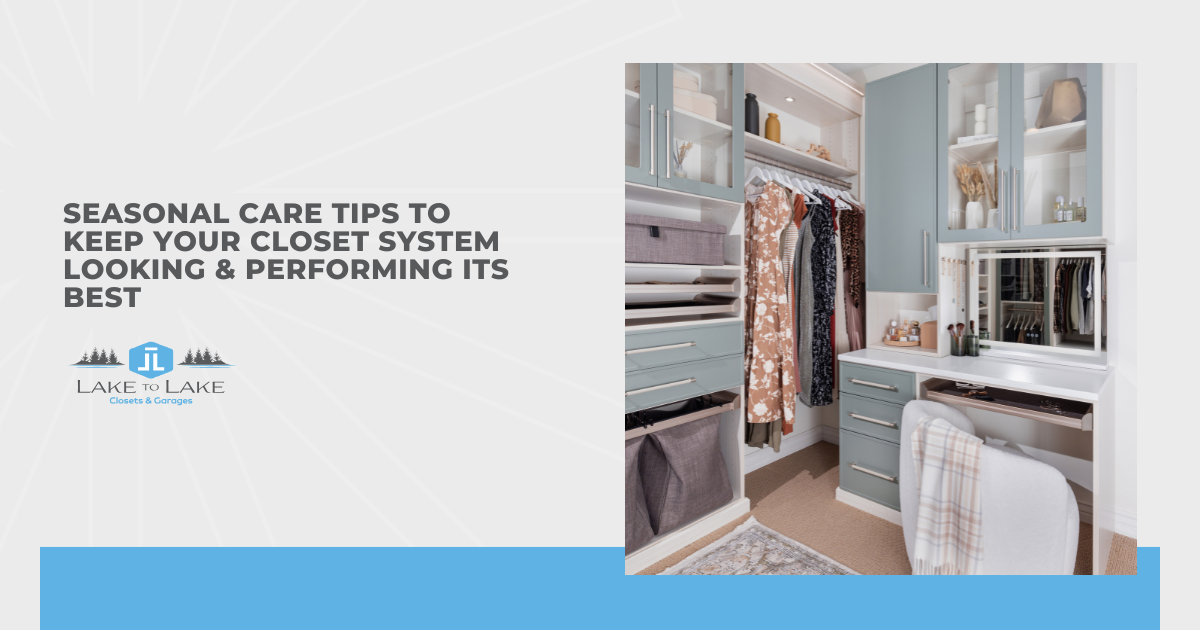
Don't wait until your custom closet systems feel cluttered or hard to use to give it some attention. Dust, moisture, and overfilled shelves can slowly degrade its appearance and function. I’ve seen how small maintenance habits can protect the finish, support the layout, and make the space easier for you to manage.
Seasonal care keeps your custom closet looking organized, polished, and dependable through every change in weather and routine. You can prevent wear by cleaning surfaces gently, checking hardware, rotating seasonal items, and avoiding too much weight on shelves or rods. Your closet should feel easy to use in spring, summer, fall, and winter, not just right after installation.
To prevent clutter, moisture, and daily wear from taking over your closet, it helps to stay ahead of seasonal changes. Let me walk through 8 seasonal care tips for your custom closet system so it stays beautiful and performing its best:
- Refresh your closet each season
- Declutter before you reorganize
- Clean shelves and drawers gently
- Protect finishes from moisture
- Inspect hardware and moving parts
- Adjust shelving for seasonal needs
- Organize shoes and accessories properly
- Avoid overloading the system
Read on, and I'll cut through the guesswork so you know exactly what your custom closet systems need as the seasons change throughout the year.
Refresh Your Closet Each Season
Seasonal changes are a good reminder to reset your closet before it starts feeling crowded. Custom closet systems work best when the items you use most are easy to reach and the off-season pieces are moved out of the way. I like treating this as a quick reset instead of a major project because it keeps the space manageable.
Move current-season clothing, shoes, and accessories into the most convenient spots. Place off-season items higher up, farther back, or inside labeled bins if they don’t need daily access. Small changes like these help the closet match the way you’re actually living right now.
A seasonal refresh also keeps clutter from building slowly over time. When items are rotated with intention, you’re less likely to dig through coats in July or sandals in January. Your closet should feel useful in the season you’re in, not stuck in the season that already passed.
Declutter Before You Reorganize
Clutter can make even a well-designed closet feel harder to use. Before moving items around, remove anything that no longer fits, gets worn, or supports your current routine. Custom closet systems perform better when they aren’t filled with things that don’t need to be there.
One mistake I often see is reorganizing without editing first. That usually means the same clutter gets shifted from one shelf to another instead of actually leaving the space. A cleaner closet starts with better decisions about what deserves storage.
Use a simple sorting system before putting items back:
- Keep: Save items you wear often, use regularly, or truly enjoy having within reach. These pieces should earn the most convenient spots because they support your daily routine and make the closet easier to use.
- Repair: Set aside pieces that need small fixes before returning them to the closet. Loose buttons, broken zippers, worn heels, or damaged seams should be handled first so they don’t sit unused for another season.
- Donate: Let go of items that are still in good condition but no longer fit your needs. Passing them along keeps your closet lighter and gives those pieces a better chance of being used again.
- Discard: Remove items that are too worn, damaged, stained, or stretched out to serve a purpose. Keeping them only takes up valuable space and makes your closet feel more crowded than it needs to be.
Clean Shelves And Drawers Gently
Dust, lint, and debris can collect in drawers, corners, shoe shelves, and around hardware. I recommend cleaning these areas seasonally because buildup can make the closet look older than it really is. Gentle cleaning helps protect the finish while keeping the whole system fresh.
Use a soft cloth for dusting and a mild cleaner when surfaces need more attention. Avoid harsh chemicals, rough scrubbers, and too much water because they can damage shelves, drawer fronts, and custom finishes. Let each surface dry before placing clothing, shoes, or accessories back inside.
Focus on areas that get touched or used the most:
- Drawer Interiors: Remove everything from each drawer before wiping the inside corners, edges, and base. Small debris, tags, lint, and dust can build up quickly, especially in drawers used for accessories or folded clothing.
- Shoe Shelves: Wipe shoe shelves regularly because dirt, dust, and salt residue can transfer from footwear onto the surface. Dry shoes before returning them so moisture doesn’t sit against the finish or create odors.
- Rods and Hooks: Clean rods and hooks where hands, hangers, belts, bags, and accessories make frequent contact. These touch points can collect oils and dust, so a gentle wipe helps keep them looking polished.
- Cabinet Fronts: Use a soft cloth and light pressure when cleaning cabinet fronts or drawer faces. Too much scrubbing can dull the finish, while regular gentle cleaning keeps the visible areas looking fresh.
Protect Finishes From Moisture
Moisture can quietly wear down the look and condition of a closet system. Wet shoes, damp coats, umbrellas, and humid air can affect shelves, drawers, and stored items if they’re placed inside too soon. Custom closet systems stay in better shape when moisture is managed before it reaches finished surfaces.
Let wet items dry in an open area before returning them to the closet. Use trays or mats for boots, especially during Minnesota winters when snow, slush, and road salt can come indoors. Good airflow also helps prevent stale or musty smells from settling into enclosed areas.
I’ve seen small moisture habits make a big difference over time. When damp items are kept away from finished surfaces, you help protect both the closet and the things stored inside it. Your closet will stay cleaner, fresher, and easier to maintain through seasonal weather changes.
Inspect Hardware And Moving Parts
Hardware affects how your closet feels every time you use it. Drawer slides, hinges, rods, hooks, valet rods, and pull-out accessories should move smoothly and stay secure. I see hardware checks as one of the easiest ways to protect long-term performance without waiting for something to break.
Check for small signs that parts may need attention:
- Loose Screws: Tighten loose screws as soon as you notice movement in rods, hooks, handles, or brackets. Small shifts can create extra strain on nearby parts, especially when the closet holds heavier seasonal items.
- Sticky Drawers: Pay attention to drawers that drag, stick, or feel uneven when opened. Debris, misalignment, or too much weight inside the drawer can affect movement and make daily use more frustrating.
- Wobbly Rods: Check rods that move, dip, or feel unstable when holding clothing. Reducing weight and checking the supports early can help prevent sagging or damage to the surrounding closet structure.
- Noisy Hinges: Listen for squeaking, rubbing, or uneven movement when doors open and close. Small hinge issues are easier to correct early before they affect alignment or make the closet feel worn.
Minor issues are easier to fix when they’re caught early. Waiting too long can put extra stress on the surrounding parts and make the closet less pleasant to use. A quick seasonal inspection keeps everything feeling smooth, sturdy, and dependable.
Adjust Shelving For Seasonal Needs
Storage needs change when bulky sweaters, coats, boots, or seasonal bins come in and lighter items move out. Adjustable shelving helps your closet adapt instead of forcing everything into the same layout all year. Custom closet systems should support your routine as it changes from season to season.
I believe flexibility is one of the biggest benefits of a well-planned closet. In Minneapolis, closet storage often has to shift between heavy winter layers, boots, and lighter warm-weather clothing. If tall boots need more room in winter, shelves can shift to make space.
Better spacing makes the closet easier to use and easier to keep neat. Crowded shelves lead to wrinkled clothing, hidden items, and messy stacks. A small adjustment can make the whole system feel more intentional.
Organize Shoes And Accessories Properly
Shoes and accessories can make a closet feel messy fast when they don’t have a clear home. Shoe racks, cubbies, hooks, trays, dividers, jewelry inserts, belt racks, and tie organizers help keep smaller items visible and controlled. I like using dedicated storage because it turns small, easy-to-lose items into part of the design.
Group items in ways that match how you use them:
- Shoes: Keep pairs together and place the ones you wear most often where they’re easy to reach. Clean footwear before storing it so dirt, moisture, and salt don’t transfer onto shelves or nearby items.
- Belts and Ties: Use racks or dedicated organizers so belts and ties stay visible, separated, and easy to grab. Proper storage also helps prevent tangling, creasing, and wasted time searching through mixed accessories.
- Jewelry: Store jewelry in trays or divided inserts to keep pieces separated and protected. Small compartments make it easier to see what you own while reducing scratches, knots, and clutter inside drawers.
- Bags and Hats: Give bags and hats enough open space so they hold their shape between uses. Crowding these items can cause crushing, bent brims, or messy piles that make the closet harder to maintain.
Clear categories make daily routines easier. You spend less time searching and more time using the closet the way it was meant to function. A closet feels more custom when every item has a place that makes sense.
Avoid Overloading The System
Too much weight can affect shelves, rods, drawers, and hardware over time. Custom closet systems are built for daily use, but balanced storage still matters. Overcrowding also makes it harder to see what you own, which often leads to more clutter.
Spread heavier items across different areas instead of stacking them all in one spot. Avoid forcing drawers shut or packing hanging rods so tightly that clothing can’t move. Leave enough space for items to slide, hang, and sit properly.
One thing I always pay attention to is whether the closet feels easy to use when it’s full. If you have to push, dig, or rearrange things every day, the system is carrying too much. Leaving a little breathing room helps the closet look better, work better, and last longer.
Conclusion
Seasonal maintenance doesn’t have to be complicated. A quick check a few times a year can help you spot small issues, clear out what no longer belongs, and keep the system easy to use. You don’t need special tools or a full day of work to stay ahead of wear. When care becomes part of your seasonal routine, your closet stays cleaner, steadier, and more useful without adding stress to your routine.
